
LISBON 8th World Conference on Research in Chemical, Biological & Environmental Engineering: RCBE2-27


+91 9781001229, +66 62 601 8051,
+351 920 619 073
+91 9781001229, +66 62 601 8051,
+351 920 619 073

Full Articles/ Reviews/ Shorts Papers/ Abstracts are welcomed in the following research fields:
Focuses on converting raw materials into valuable chemical products safely, efficiently, and at scale.
Thermodynamics & Transport Phenomena: Chemical thermodynamics, phase equilibria, fluid mechanics, heat transfer, and mass transfer.
Reaction Engineering & Kinetics: Chemical kinetics, homogeneous/heterogeneous catalysis, reactor design (batch, CSTR, PFR), and surface science.
Separation Processes: Distillation, liquid-liquid extraction, crystallization, membrane separations, and absorption/adsorption.
Process Systems Engineering: Process design and synthesis, process control, optimization, process safety, and techno-economic analysis (TEA).
Materials Science & Polymer Engineering: Macromolecular chemistry, soft matter, nanomaterials, surface functionalization, and rheology.
Applies engineering principles to biological organisms, systems, and molecular processes.
Bioprocess & Bioreactor Engineering: Fermentation technology, upstream/downstream bioprocessing, cell culture engineering, scale-up dynamics, and cell separation/purification.
Metabolic Engineering & Synthetic Biology: Pathway optimization, gene editing, metabolic flux analysis, genetic circuit design, and strain engineering.
Biomolecular Engineering: Protein engineering, enzyme kinetics, directed evolution, macromolecular interactions, and bioinformatics.
Biomedical & Tissue Engineering: Biomaterials, drug delivery systems, regenerative medicine, tissue scaffolds, cellular biomechanics, and microfluidic "organs-on-a-chip."
Focuses on assessing, mitigating, and reversing anthropogenic impacts on air, water, soil, and public health.
Water & Wastewater Treatment: Physicochemical treatment, biological wastewater treatment, advanced oxidation processes, desalination, and stormwater management.
Air Pollution Control: Particulate and gaseous emission control, atmospheric chemistry, dispersion modeling, greenhouse gas mitigation, and indoor air quality.
Solid & Hazardous Waste Management: Landfill design, hazardous waste stabilization, waste minimization, sludge treatment, and contaminated site remediation.
Environmental Fluid Mechanics & Hydrology: Contaminant transport in groundwater, surface water modeling, soil dynamics, and atmospheric boundary layers.
Eco-Risk Assessment & Environmental Health: Environmental toxicology, fate and transport modeling, exposure assessment, and environmental epidemiology.
Where these three traditional pillars intersect, some of the most active modern research and industrial fields emerge.
Leveraging chemical principles to process biological substances or using biological catalysts for chemical synthesis.
Biocatalysis & Green Synthesis: Replacing heavy-metal catalysts with enzymes for industrial fine chemical synthesis.
Bioplastics & Renewable Polymers: Manufacturing biodegradable polymers (like PLA or PHA) via bacterial fermentation.
Pharmaceutical & Biopharmaceutical Production: Scale-up manufacturing of monoclonal antibodies, vaccines, cellular therapies, and small-molecule drugs.
Biosensors & Bio-instrumentation: Integrating chemical sensing surfaces with biological recognition elements for diagnostics.
Preventing pollution at the source through chemical innovation and novel processing methods.
Carbon Capture, Utilization & Storage (CCUS): Direct air capture (DAC), solvent-based amine scrubbing, catalytic conversion of $\text{CO}_2$ to fuels/chemicals, and mineral carbonation.
Circular Economy & Waste Valorization: Chemical recycling of plastics, electronic waste (e-waste) hydrometallurgy, and industrial ecology (symbiosis).
Green Solvents & Reaction Media: Supercritical fluid processing, ionic liquids, deep eutectic solvents, and solvent-free reactions.
Sustainable Energy Technologies: Fuel cell engineering, advanced battery chemistry, green hydrogen production (electrolysis), and solar thermal chemical processes.
Using biological systems and living organisms to monitor, remediate, or restore environmental ecosystems.
Bioremediation & Phytoremediation: Biostimulation and bioaugmentation of contaminated soils/groundwater using microbes or plants to degrade heavy metals, hydrocarbons, or PFAS.
Bioenergy & Biofuels: Production of bio-methane via anaerobic digestion, cellulosics-to-ethanol pathways, and microalgal cultivation for aviation bio-jet fuel.
Microbial Ecology of Treatment Systems: Microbiome dynamics in activated sludge, biofilters, membrane bioreactors (MBR), and constructed wetlands.
Environmental DNA (eDNA) & Bio-monitoring: Genomic techniques to track biodiversity, invasive species, or pathogen persistence in natural ecosystems.
Integrated systems that draw simultaneously from all three domains.
Life Cycle Assessment (LCA) & Sustainable System Design: Quantifying cradle-to-grave environmental impacts of biological and chemical production processes.
Water-Energy-Food-Environment Nexus: Engineering closed-loop agriculture, nutrient recovery (phosphorus and nitrogen from wastewater), and sustainable fertilizer synthesis.
Synthetic Biology for Planetary Health: Engineered microbes designed specifically to consume environmental microplastics, capture atmospheric carbon, or sense pollution in real time.

Dr. Y. Thaweesak
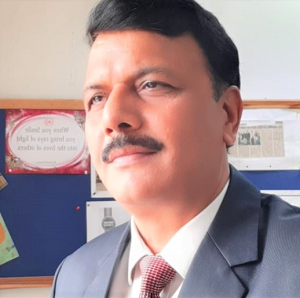
Prof.(Dr.) Rajesh Singh Tomar
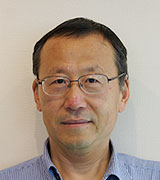
Prof. Wei-Bin Zhang

Prof. Dr. Nuno Alexandre Soares Domingues

Prof. Dr. Bulent TOPCUOGLU
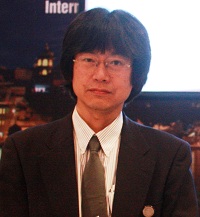
Prof. Dr. Kazuaki Maeda,
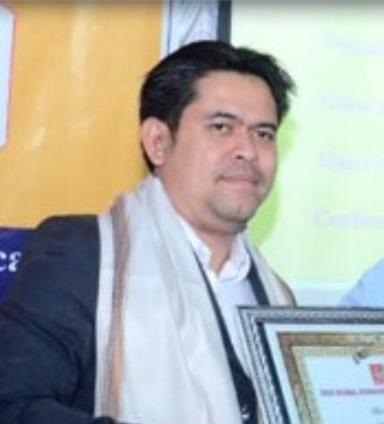
Tosaporn Mahamud.,Ph.D