
ROME 9th World Conference on Chemical, Biological, Environmental & Natural Sciences: RCBENS-27


+91 9781001229, +66 62 601 8051,
+351 920 619 073
+91 9781001229, +66 62 601 8051,
+351 920 619 073

Full Articles/ Reviews/ Shorts Papers/ Abstracts are welcomed in the following research fields:
These areas focus on the distinct core principles unique to each specific scientific discipline.
The study of matter, its properties, composition, and how it changes during reactions.
Organic Chemistry: Carbon compounds, functional groups, synthesis pathways, and reaction mechanisms.
Inorganic Chemistry: Coordination compounds, transition metals, organometallic chemistry, and crystal field theory.
Physical Chemistry: Chemical thermodynamics, kinetics, quantum chemistry, and spectroscopy.
Analytical Chemistry: Chromatography, mass spectrometry, electrochemistry, and qualitative/quantitative analysis.
The study of living organisms, their structure, function, growth, evolution, and distribution.
Molecular and Cell Biology: DNA replication, protein synthesis, membrane transport, and cellular respiration.
Genetics and Genomics: Mendelian inheritance, gene regulation, mutation mechanisms, and CRISPR gene editing.
Organismal Physiology: Nervous, cardiovascular, and endocrine systems in animals; transport and hormonal regulation in plants.
Microbiology and Virology: Bacterial genetics, viral replication cycles, and microbial pathogenesis.
The study of the environment, earth systems, and the solution of environmental problems.
Ecosystem Dynamics: Trophic levels, food webs, ecological succession, and biodiversity loss.
Atmospheric Science: Climate patterns, greenhouse gases, meteorology, and ozone depletion.
Hydrology and Oceanography: Ocean currents, the water cycle, groundwater movement, and marine ecosystems.
Soil Science (Pedology): Soil formation, nutrient profiles, erosion control, and soil chemistry.
The broader study of the physical universe, focusing on non-living natural phenomena.
Geology and Tectonics: Rock cycles, plate tectonics, seismology, and mineralogy.
Astronomy and Astrophysics: Stellar evolution, planetary systems, cosmic radiation, and galactic dynamics.
Geomorphology: The evolution of landforms, weathering, and surface processes.
These fields represent the spaces where these sciences merge to address complex, multi-system phenomena in nature and industry.
The ultimate bridge between chemistry and biology, explaining life at a molecular level.
Enzyme Kinetics and Mechanisms: How catalysts lower activation energy in metabolic pathways.
Metabolic Pathways: Integrated networks like glycolysis, the Krebs cycle, and lipid metabolism.
Structural Biology: Determining the 3D structures of biomacromolecules (proteins, nucleic acids).
The intersection of chemical properties and environmental systems.
Pollutant Fate and Transport: How heavy metals, plastics, and pesticides move through air, water, and soil.
Atmospheric Chemistry: Smog formation, acid rain generation, and the chemical cycles of carbon and nitrogen.
Bioremediation: Utilizing microbes or plants (phytoremediation) to chemically degrade environmental contaminants.
The integration of biology, geology, and chemistry across environmental scales.
Global Geochemical Cycles: The interlinked movement of carbon, nitrogen, phosphorus, and sulfur through the biosphere.
Paleoclimatology: Using biological indicators (fossils, tree rings) and chemical proxies (ice cores) to understand Earth's history.
Marine Geochemistry: Chemical equilibria in oceans, ocean acidification, and coral reef degradation.
The application of biological and environmental theories to protect biodiversity and natural resources.
Restoration Ecology: The science of repairing human-disturbed ecosystems.
Invasive Species Biology: The ecological impact and chemical/biological control of non-native species.
Sustainable Resource Management: Forestry, sustainable fisheries, and the preservation of ecosystem services

Dr. Y. Thaweesak
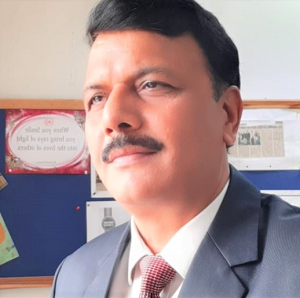
Prof.(Dr.) Rajesh Singh Tomar

Prof. Dr. Nuno Alexandre Soares Domingues

Prof. Dr. Bulent TOPCUOGLU
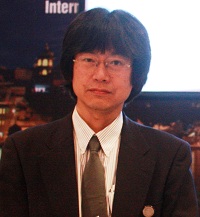
Prof. Dr. Kazuaki Maeda,
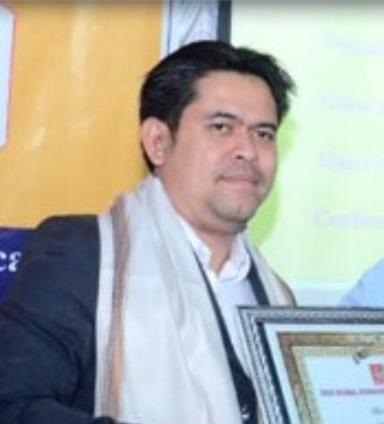
Tosaporn Mahamud.,Ph.D