
VIENNA 6th International Conference on Research in Science, Engineering & Technology: VRSET-27


+91 9781001229, +66 62 601 8051,
+351 920 619 073
+91 9781001229, +66 62 601 8051,
+351 920 619 073

Full Articles/ Reviews/ Shorts Papers/ Abstracts are welcomed in the following research fields:
These are the foundational pillars that can be studied as distinct, standalone bodies of knowledge.
Physics
Classical Mechanics
Quantum Mechanics
Thermodynamics and Statistical Mechanics
Electromagnetism
Relativity (Special and General)
Chemistry
Organic and Inorganic Chemistry
Physical Chemistry
Analytical Chemistry
Biochemistry
Earth and Space Sciences
Astronomy and Astrophysics
Geology and Geophysics
Meteorology and Atmospheric Science
Oceanography
Formal Sciences
Pure Mathematics (Algebra, Geometry, Topology)
Applied Mathematics (Calculus, Statistics, Probability)
Theoretical Computer Science
Civil Engineering
Structural Engineering
Geotechnical Engineering
Transportation Systems
Hydraulic and Water Resources Engineering
Mechanical Engineering
Fluid Dynamics and Aerodynamics
Solid Mechanics and Materials Science
Kinematics and Machine Design
HVAC (Heating, Ventilation, and Air Conditioning)
Electrical Engineering
Power Systems and Electrical Grids
Control Systems
Signal Processing
Telecommunications Engineering
Information Technology (IT)
Database Management Systems (DBMS)
Networking and Infrastructure
Cloud Computing Infrastructure
Cybersecurity Protocols
Manufacturing & Industrial Technology
Machining and Fabrication Technology
Assembly Line Automation
Supply Chain Logistics Software
The most groundbreaking advancements happen where these disciplines overlap. Below are the highly interconnected topics born from the fusion of Science, Engineering, and Technology.
Artificial Intelligence and Machine Learning
Interrelatedness: Combines mathematical statistics (Science) with software engineering (Engineering) to build predictive algorithms (Technology).
Subtopics: Deep Learning, Natural Language Processing (NLP), Computer Vision, Reinforcement Learning.
Quantum Computing
Interrelatedness: Takes principles of quantum mechanics (Science) and applies hardware engineering (Engineering) to create a radically new processing system (Technology).
Subtopics: Quantum Cryptography, Qubit Hardware Architecture, Quantum Algorithms.
Robotics and Autonomous Systems
Interrelatedness: Blends physics and cognitive science (Science) with mechanical and electrical design (Engineering) to create autonomous tech (Technology).
Subtopics: Kinematics and Dynamics, Sensor Fusion, Computer Vision Integration, Human-Robot Interaction (HRI).
Biomedical Engineering and Healthtech
Interrelatedness: Merges biology and medicine (Science) with electrical and mechanical design (Engineering) to build life-saving devices (Technology).
Subtopics: Prosthetics and Orthotics, Medical Imaging Systems (MRI, CT scans), Neural Engineering, Wearable Health Monitors.
Biotechnology and Genetic Engineering
Interrelatedness: Uses molecular biology (Science) and chemical processing (Engineering) to manipulate genetic material for agriculture and medicine (Technology).
Subtopics: CRISPR and Gene Editing, Synthetic Biology, Bioprocess Engineering, Agricultural Biotechnology.
Bioinformatics
Interrelatedness: Uses computer science and statistics (Technology/Science) to analyze massive biological data sets like DNA sequencing (Science).
Subtopics: Genomics, Proteomics, Computational Evolutionary Biology.
Materials Science and Nanotechnology
Interrelatedness: Investigates atomic-level physics and chemistry (Science) to engineer new materials (Engineering) used in microchips, solar panels, and medical devices (Technology).
Subtopics: Nanomaterials and Nanoparticles, Biomaterials, Smart Materials, Metallurgy.
Renewable Energy Engineering
Interrelatedness: Applies thermodynamics and meteorology (Science) through mechanical/electrical design (Engineering) to generate clean power (Technology).
Subtopics: Photovoltaic (Solar) Systems, Wind Turbine Technology, Hydrogen Fuel Cells, Grid Integration and Energy Storage.
Environmental and Sustainable Engineering
Interrelatedness: Uses ecology and chemistry (Science) to design systems (Engineering) that mitigate pollution and combat climate change (Technology).
Subtopics: Carbon Capture and Storage (CCS), Waste-to-Energy Systems, Desalination and Water Purification Technology.
Aerospace Engineering and Space Tech
Interrelatedness: Relies on astrophysics and aerodynamics (Science) to engineer aircraft and spacecraft (Engineering) capable of satellite communication and deep-space telemetry (Technology).
Subtopics: Propulsion Systems (Chemical and Ion), Orbital Mechanics, Avionics and Guidance Systems, Satellite Technology.
These overarching fields study, guide, and dictate how Science, Engineering, and Technology are integrated into human society.
Systems Engineering
Operations Research
Risk Analysis and Safety Engineering
Product Lifecycle Management (PLM)
Data Science and Analytics
Big Data Architectures
Predictive Modeling
Data Visualization
Ethics and Philosophy of STEM
AI Ethics and Algorithmic Bias
Bioethics (Cloning, Gene Drive Ethics)
Technological Determinism vs. Social Constructivism

Dr. Y. Thaweesak
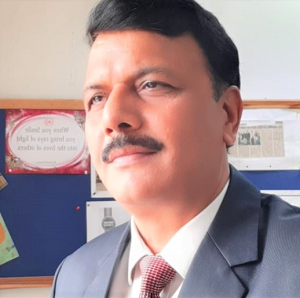
Prof.(Dr.) Rajesh Singh Tomar

Prof. Dr. Nuno Alexandre Soares Domingues

Prof. Dr. Bulent TOPCUOGLU
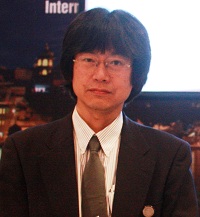
Prof. Dr. Kazuaki Maeda,

Prof. Dr. Haiu Aurelia

Tosaporn Mahamud.,Ph.D