
VIETNAM 7th World Congress on Chemical, Biological, Environmental & Earth Sciences: CBEES-27


+91 9781001229, +66 62 601 8051,
+351 920 619 073
+91 9781001229, +66 62 601 8051,
+351 920 619 073

Full Articles/ Reviews/ Shorts Papers/ Abstracts are welcomed in the following research fields:
The study of matter, its properties, how and why substances combine or separate, and how substances interact with energy.
Organic Chemistry: Structure, properties, and reactions of carbon-based compounds.
Inorganic Chemistry: Properties and behavior of inorganic compounds (metals, minerals, organometallic compounds).
Physical Chemistry: Chemical thermodynamics, kinetics, quantum mechanics, and spectroscopy.
Analytical Chemistry: Instrumentation and methods used to separate, identify, and quantify matter.
Theoretical & Computational Chemistry: Molecular modeling and quantum chemistry calculations.
The study of living organisms, their structure, function, growth, origin, evolution, and distribution.
Molecular & Cellular Biology: Cellular structures, organelles, DNA replication, and gene expression.
Genetics & Genomics: Heredity, genetic variation, and the mapping of genomes.
Organismal Biology & Physiology: Anatomy, morphology, and physiological processes of plants, animals, and microbes.
Evolutionary Biology: Origin of species, natural selection, and phylogenetic relationships.
Ecology: Interactions between organisms and their physical environment.
The study of the solid Earth, its waters, and the air that envelops it, including geologic, hydrologic, and atmospheric systems.
Geology: Rock mechanics, mineralogy, petrology, stratigraphy, and structural geology.
Geophysics & Tectonics: Earth's magnetic field, seismology, and plate tectonics.
Hydrology & Hydrogeology: Movement, distribution, and quality of water above and below the Earth's surface.
Atmospheric Sciences & Meteorology: Atmospheric dynamics, weather patterns, and climate systems.
Oceanography: Physical, chemical, and geological characteristics of the world's oceans.
An integrated, interdisciplinary field that studies the environment and looks for solutions to environmental problems.
Environmental Quality & Pollution: Air, water, and soil pollution, toxicology, and remediation.
Conservation Biology: Preservation of biodiversity, habitat restoration, and endangered species management.
Natural Resource Management: Sustainable forestry, fisheries, agriculture, and land-use planning.
Climate Change Science: Drivers, impacts, mitigation, and adaptation strategies for global climate shifts.
These subtopics sit at the intersections of the core disciplines, demonstrating how they depend on one another.
Biochemistry: Chemical processes within and relating to living organisms (enzymes, metabolism, macromolecules).
Chemical Biology: Application of chemical techniques and tools to manipulate and study biological systems.
Pharmacology & Toxicology: Interaction of chemical substances with living organisms, drug design, and toxic effects.
Molecular Genetics: Chemical nature of the gene and the biochemical mechanisms of heredity.
Geochemistry: Application of chemistry to explain the mechanisms behind major geological systems, crustal composition, and mantle dynamics.
Environmental Chemistry: Study of chemical species in the air, soil, and water environments, and the impacts of human activity on them.
Atmospheric Chemistry: Chemical composition and reactions occurring within the Earth's atmosphere (e.g., ozone depletion, smog formation).
Biogeochemistry: The study of physical, chemical, geological, and biological processes that drive the cycles of elements (like carbon, nitrogen, and phosphorus) through the Earth system.
Biogeography: The geographic distribution of plants, animals, and microbes across Earth through space and time.
Paleontology & Geobiology: The study of ancient life through fossils and how biosphere interactions have shaped Earth's history and geology.
Ecohydrology: The mutual interactions between the hydrological cycle and ecosystems.
Soil Science (Pedology & Edaphology): The study of soil formation, classification, and its interaction with living plants and soil biota.
Global Environmental Change: The study of how human-driven chemical inputs (pollution, greenhouse gases) alter Earth's climate systems, affecting global biodiversity, ecosystems, and geological feedback loops.
Astrobiology: The study of the origin, evolution, and distribution of life in the universe, combining chemical prebiotic evolution, biological survival limits, and planetary/earth-like geology.

Dr. Y. Thaweesak
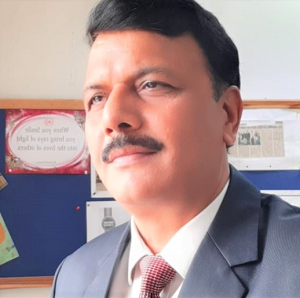
Prof.(Dr.) Rajesh Singh Tomar

Prof. Dr. Nuno Alexandre Soares Domingues

Prof. Dr. Bulent TOPCUOGLU

Prof. Dr. Kazuaki Maeda,

Prof. Dr. Haiu Aurelia

Tosaporn Mahamud.,Ph.D